Whoever sees in his dream that he has a dagger in his hand gains money and wealth. And whoever sees that he puts a dagger or a knife into its sheath lies with a woman.
Section letter kha
2 readings from 2 sources.
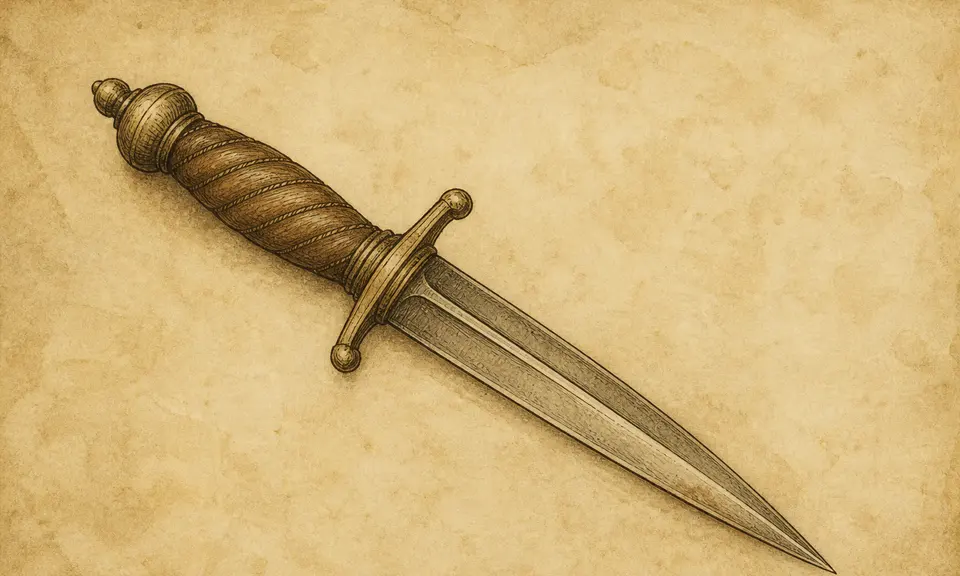
Miller reads the dagger by whose hand it is in: seen, it denotes threatening enemies, and wrenched from another's hand it means you will counteract their influence and overcome misfortune. an-Nabulsi reads only the hand that holds it, and reads it as profit — whoever sees that he has a dagger in his hand gains money and wealth. Both books agree that the blade belongs to whoever is holding it; they differ on whether that is a victory or a trade.
This paragraph was generated by a model. It sums up the sources above, comes from none of them and is attributed to no one.
Whoever sees in his dream that he has a dagger in his hand gains money and wealth. And whoever sees that he puts a dagger or a knife into its sheath lies with a woman.
Section letter kha
If seen in a dream, denotes threatening enemies. If you wrench the dagger from the hand of another, it denotes that you will be able to counteract the influence of your enemies and overcome misfortune.