Headed leeks and carrots and all other nourishing vegetables signify gains, and they go against only those who are going to law about land, for they are torn up by the roots.
Passage Book I, 67
3 readings from 3 sources.
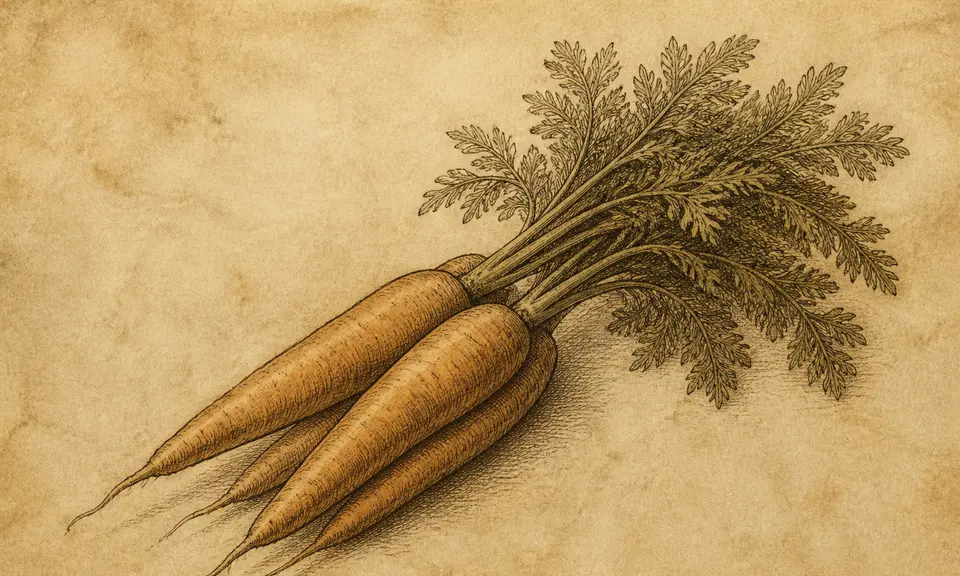
Miller makes the carrot the healthiest thing in his book: prosperity and health, and for a young woman who eats them an early marriage and several hardy children. Artemidorus counts the carrot with headed leeks and all other nourishing vegetables as gains, and sets it against one kind of dreamer only — those who are going to law about land, because they are torn up by the roots. an-Nabulsi reads the same root as rebuke and restraint, and then as a foul-mouthed, repellent man. Nothing in either reading explains the other. Put side by side they make the plainest case in this corpus that a vegetable carries no meaning of its own — it carries whatever the book that names it already thought about the people who grow it.
This paragraph was generated by a model. It sums up the sources above, comes from none of them and is attributed to no one.
Headed leeks and carrots and all other nourishing vegetables signify gains, and they go against only those who are going to law about land, for they are torn up by the roots.
Passage Book I, 67
In a dream it is rebuke and restraint, and the carrot is a foul-mouthed, repellent man. So whoever sees a carrot in his hand is in a hard matter that is made easy for him. And it is said the carrot is care and sorrow for the man who came by it and ate it. And whoever sees as if he eats the carrot comes by good and use; and the carrot points to a man who is easy to get on with. So whoever sees in his hand something of it that is lawful, and was in a hard matter or in prison, got clear and escaped.
Section letter jim
To dream of carrots, portends prosperity and health For a young woman to eat them, denotes that she will contract an early marriage and be the mother of several hardy children.